Search

Eternal Approach

Category

Sounding the Depths of Truth

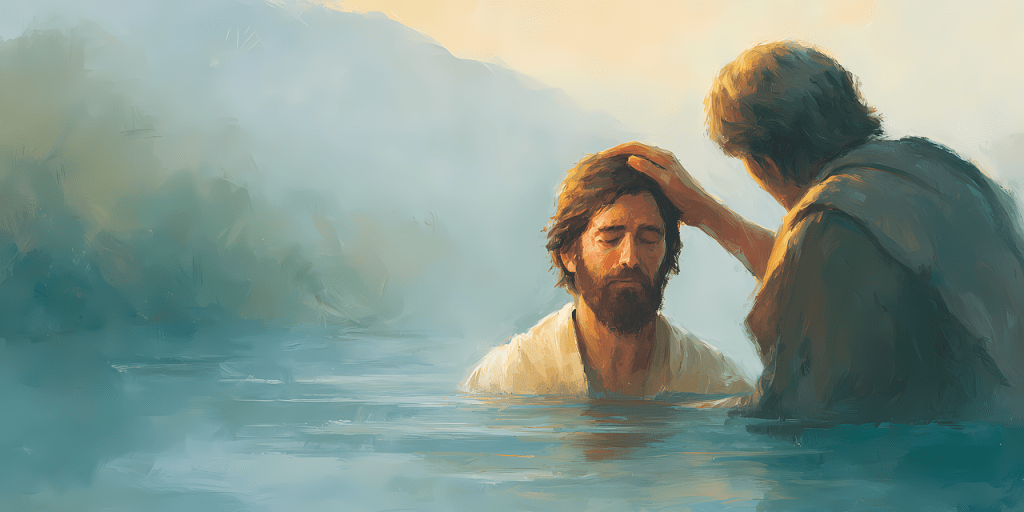
A “Sacrament” is Salvation in Installments: Water Baptism

Many denominations today clearly teach that Baptism (water immersion or sprinkling) is a necessary component of salvation.

In fact, most of the mainline Protestant denominations, let alone Catholicism, teach this.


Baptism, they say, is the “doorway” to Christ. Or the door by which a person enters into salvation. In Catholicism’s case, they believe this is the first step to enter into the “Church” – without which, they believe, there is no salvation.

Even as they preach about the importance of faith, they also require that one must be baptized in order to be saved. And then they add “good works” to the required mix.

Many groups add more “sacraments” such as the Lord’s Table (Communion according to most Protestants) or the Eucharist or the Eucharistic Celebration (according to Catholics, Episcopalians, etc.).

And although there are some differences in the ways that these sacraments are observed, they share the common heresy in teaching that there is some efficacy for forgiveness, cleansing, and salvation in these practices.

And while we’re at it, don’t forget about those who believe that the “confession of sins” to a priest (or an elder or some other authority), penance, good works, acts of contrition, tithing, church membership, confirmation, and a host of other things are also considered sacraments. Or are considered efficacious in cleansing from sin or in confirming one’s salvation.

So, what this all means is that salvation, according to them, is NOT simply by faith alone in Christ alone according to the Bible alone. But is actually based on a process of observing the sacraments.

Or “faith” in a kind of salvation through multiple installments.

Continue reading “A “Sacrament” is Salvation in Installments: Water Baptism”
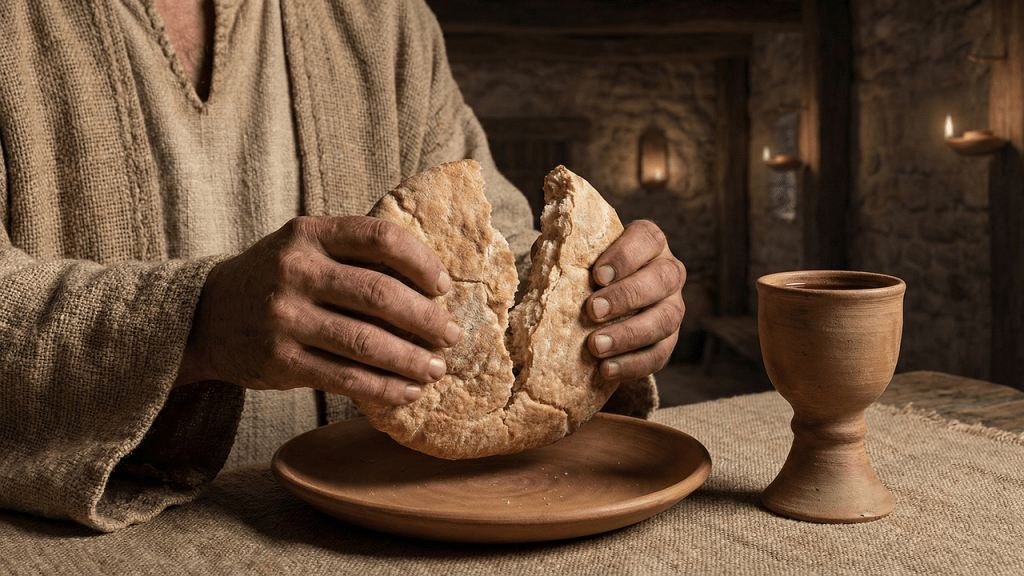

A “Sacrament” is Salvation in Installments: The Lord’s Table

I was looking at a book published by a local church that my wife and I visited recently. The book explained the doctrines held by that local body. What struck me was how the book used the term “sacraments”.

In another search, I found a book that discussed how people are increasingly “drawn” to the Anglican Liturgy (which is the formal style and rituals of that denomination – with its many “sacraments”).

Much of this rising interest in the traditional, liturgical churches stems from a desire many have to return to the outward feelings experienced in these church environments. Experiences that include worship services with candles, a beautiful sanctuary, quieter music, stained glass windows, clergy in robes, no drum and electric guitar setup on stage, and the use of old hymnals instead of jumbotrons.

This old style of things is something I’m very familiar with. Having grown up in a traditional Methodist church with a much quieter and more formal style.

Which, by the way, has its appeal. And, IF the UMC had actually preached the gospel and stood on the fundamentals of the faith, I’d still be there.

What is disturbing about all this is how Evangelicalism has jettisoned most of the Traditional stuff in favor of the “Contemporary”. Even as so many other religious groups are going back to the traditional rituals and the “contemplative” religious atmosphere.

Continue reading “A “Sacrament” is Salvation in Installments: The Lord’s Table”

Whose “spirit” is Leading You?

The Holy Spirit does not work in contradiction to the word of God.

He does not reveal truths that are contradictory to the word of God.

He does not lead people to trust in His working within them above, nor in contradiction to, the word of God.

We must be very careful not to allow our feelings, experiences, and impulses to tempt us to set aside, to go around. or in some other way to ignore the words of God.

In other words, the word of God is our only “checks and balances” to know if what we believe and have experienced is truly of the Holy Spirit. Or if they are the work of some other spirit.

Continue reading “Whose “spirit” is Leading You?”

A New Kind of Morality?

Very few politicians are morally pure.

OK. None of them are.

And, while we’re at it, neither are any of us.

Every single one of us is described by the following verse:

“For there is not a just man upon the earth, that doeth good, and sinneth not.” (Ecclesiastes 7:20)

A sobering thought.

So, what’s the point?

That it is very hypocritical for the cultural, political, and religious Left to claim to have some special corner on morality.

Or that the politicians they support have greater moral character than anyone on the Right – that they hate. And whom they reject on supposedly “moral” grounds. 

That is simply laughable. And even tragically naive on their part.  

But the Left does this consistently. As it runs headlong into increasingly immoral positions in virtually every cultural and political area. 

Unless . . .UNLESS . . .  they have decided to redefine what “morality” actually is.

In other words, they use the same words that the vast majority of people use. But their own definitions of those words are entirely different. 

Conclusion: It’s not your dad’s dictionary anymore. 

Continue reading “A New Kind of Morality?”

Deconstructing America for the New “gods”


About half of the United States population is being moved towards violence or aggravated activism over the “truth” that the mainstream media keeps telling them.

Even very normal, Christian men and women are angered by the reports they are getting from all kinds of supposedly “independent” sources. Which is due to the lack of discernment that Christians often refuse to apply to their selection of the news.

They tend to consume it pretty much as the popular culture does.

Which is 95% Left and progressively biased. Which isn’t really debatable. They don’t even pretend to be otherwise anymore. 

What we are witnessing is a tutorial on how to manipulate the public mind through a massive dump of opinions masquerading as journalism. By overwhelming people with supposedly objective facts. 

Again, as I’ve said in previous posts, if 95 out of 100 sources tell you something is true, then most people lazily assume the truthfulness of those reports. Because modern people love numbers. They love the majority. They do not want to be in a fringe group.

Nor to ever appear to be in some fringe group. 

So, they choose to trust the mainstream sources.

And, as far as most people go, they generally don’t want their beliefs to cost them anything in their friendships, families, jobs, associations, or fellowships. As with their local church or school or job.

Everyone wants to be accepted and to get along. 

And that is the problem.

Continue reading “Deconstructing America for the New “gods””

Reality by Consensus

Most people today are trusting in what is generally accepted. Not what is assuredly true.

Like what the doctors say. What the scientists say. What their professors say. What their favorite authors say. What their favorite actors say. What their favorite social media people say. What their favorite news sources say.

Or what their pastors say.

In other words, they look to these groups or “authorities” to get the common or the conventional wisdom of the day.

And most people look to the positions and pontifications coming from the many institutions of higher learning across the country. What they say. What they declare is true.

But why?

What Really is it about these institutions that gives them such weight in our world and our culture?

By what authority do they really speak? What is the real foundation upon which they stand?

Some consider asking such questions to be ridiculous.

Because much of the world believes that those who have a degree or two or three are smarter and wiser and more aware of what reality is than the rest of us less-educated folk.

And, therefore, the more highly-educated are given that authority.

The authority to tell the rest of us what is actually true.

Continue reading “Reality by Consensus”

“Truth” Created by Popular Consent

Most people do not delve deeply into the events of the world. They are too busy.

Or they just trust select sources to give them what the truth is. To tell them what is happening.

And what to think.

Others delve more deeply. They may care more and want to be sure of what is true.

Yet, they make the same mistakes as the first group. They trust a limited group of sources to tell them what is happening.

And what to believe.

Continue reading ““Truth” Created by Popular Consent”

Theological Lessons from Monkey Island

If you observe those who reject the Bible, they often assume an “intellectual” posture while pretending to be smarter than the Bible believer.

In other words, they presume to stand on a position of authority high above that of those who believe in the literal record of the scriptures.

Whatever type or level of education they hold to is set forth as their basis of truth and their proof of intellectual superiority. Generally, because they have completed some course of study after which they were issued a certificate or title or plaque declaring how smart they are.

And therefore, they are superior to others. Superior in the form of science, technical training, formal education, degrees, status, or some selected facts they have memorized and regurgitated to please their college professors. Based upon the philosophical and religious biases of their professors and universities.

This presumption of intellectual and philosophical superiority accounts for much of biblical denial.

Continue reading “Theological Lessons from Monkey Island”

We are Each Accountable for Our Choice

A simple question.

What is your Authority?

In other words, what is the reason, foundation, source for your spiritual choices?

For example, the atheist denies the existence of God. And, consequently, denies that he has any sin. Or has done any sin. And has nothing to confess.

In fact, he doesn’t even believe there is anyone he has to confess to!

He does this based upon whatever authority he has chosen to follow.

Every person that has ever lived has chosen some authority to follow. To believe in.

We each must choose. There is no escaping this reality.

Continue reading “We are Each Accountable for Our Choice”

Create a free website or blog at WordPress.com.

Up ↑