“Wherefore he is able also to save them to the uttermost that come unto God by him, seeing he ever liveth to make intercession for them.” (Hebrews 7:25)
There is no other way to approach God than through Jesus Christ.
Nor is there some “secondary channel” through which a person can approach Jesus.
As some try to do through his earthly mother, Mary. As if she is somehow a participant in the “Mediatory” office of Christ. As if Christ is too stern, too hard, or too demanding to approach directly.
Believing that Mary will speak with her son and smooth the way for those who come to her!?
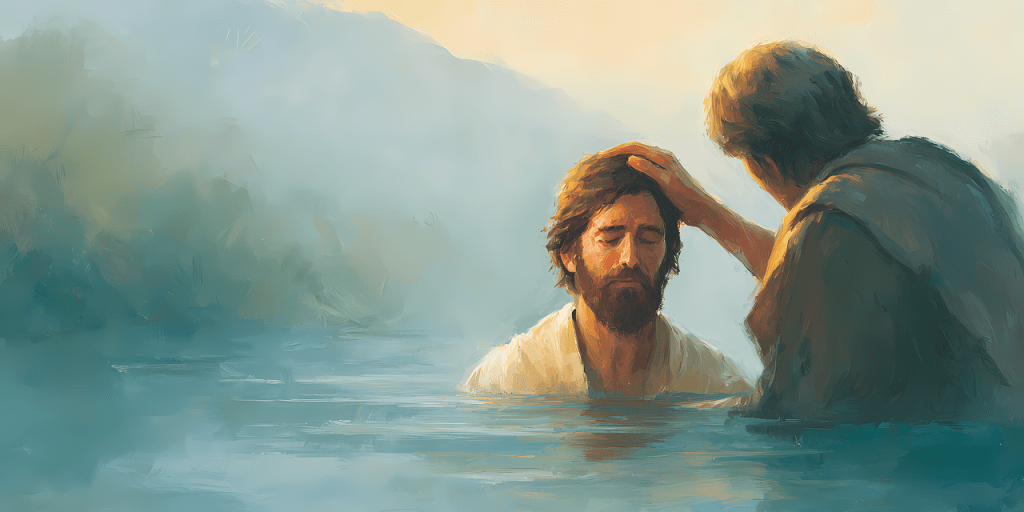
Many denominations today clearly teach that Baptism (water immersion or sprinkling) is a necessary component ofsalvation.
In fact, most of the mainline Protestant denominations, let alone Catholicism, teach this.
Baptism, they say, is the “doorway” to Christ. Or the door by which a person enters into salvation. In Catholicism’s case, they believe this is the first step to enter into the “Church” – without which, they believe, there is no salvation.
Even as they preach about the importance of faith, they alsorequire that one must be baptized in order to be saved. And then they add “good works” to the required mix.
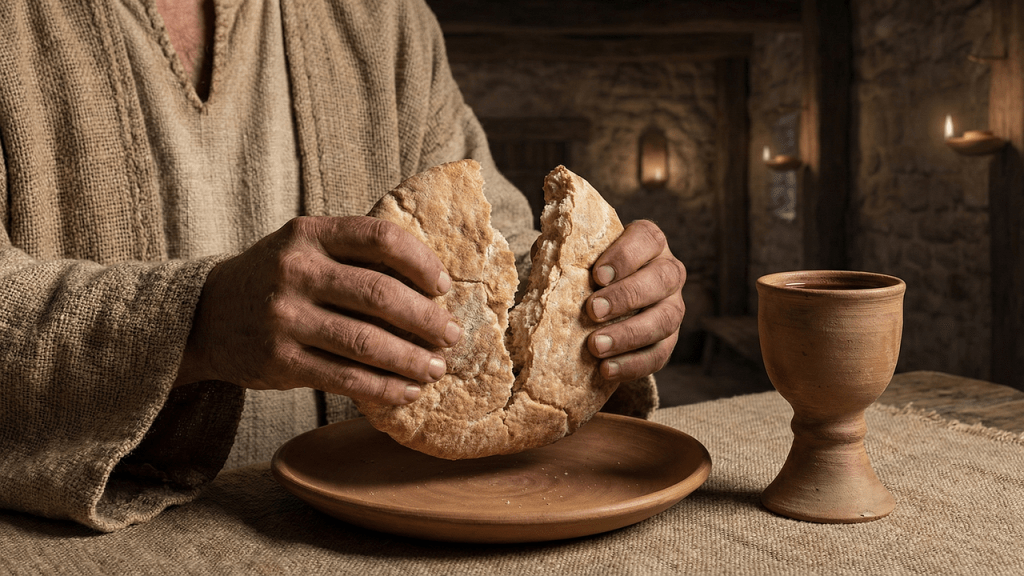
Many groups add more “sacraments” such as the Lord’s Table (Communion according to most Protestants) or the Eucharist or the Eucharistic Celebration (according to Catholics, Episcopalians, etc.).
And although there are some differences in the ways that these sacraments are observed, they share the common heresy in teaching that there is some efficacy for forgiveness, cleansing, and salvation in these practices.
And while we’re at it, don’t forget about those who believe that the “confession of sins” to a priest (or an elder or some other authority), penance, good works, acts of contrition, tithing, church membership, confirmation, and a host of other things are also considered sacraments. Or are considered efficacious in cleansing from sin or in confirming one’s salvation.
So, what this all means is that salvation, according to them, is NOT simply by faith alone in Christ alone according to the Bible alone. But is actually based on a process of observing the sacraments.
Or “faith” in a kind of salvation through multiple installments.
I was looking at a book published by a local church that my wife and I visited recently. The book explained the doctrines held by that local body. What struck me was how the book used the term “sacraments”.
In another search, I found a book that discussed how people are increasingly “drawn” to the Anglican Liturgy (which is the formal style and rituals of that denomination – with its many “sacraments”).
Much of this rising interest in the traditional, liturgical churches stems from a desire many have to return to the outward feelings experienced in these church environments. Experiences that include worship services with candles, a beautiful sanctuary, quieter music, stained glass windows, clergy in robes, no drum and electric guitar setup on stage, and the use of old hymnals instead of jumbotrons.
This old style of things is something I’m very familiar with. Having grown up in a traditional Methodist church with a much quieter and more formal style.
Which, by the way, has its appeal. And, IF the UMC had actually preached the gospel and stood on the fundamentals of the faith, I’d still be there.
What is disturbing about all this is how Evangelicalism has jettisoned most of the Traditional stuff in favor of the “Contemporary”. Even as so many other religious groups are going back to the traditional rituals and the “contemplative” religious atmosphere.
But we live in an age when everyone seems to know what the gospel is. Or at least they say that they do.
Leading to interpretations of what the gospel is being scattered all over the map. With new interpretations popping up all the time. New heresies, old heresies, and a bunch of mutations on the new and old combined.
Along with new teachers telling us all about how to have gospel-centered ministries. And how to transform your church into a gospel-centered one.
With very few of these “gospel-centered” ideas actually being Bible centered – let alone Christ centered.
Because their view of the gospel is based on or influenced by many things not related to the Bible.
From all this ministry talk, one might think that the gospel must be a very fluid thing. Something customizable, like clay formed by a potter. Something that can be conformed to suit or appeal to the culture or the times in which people live.
A man’s righteousness, even that of the best of men, is nothing but filthy rags before the perfectly holy God of all Creation.
So, men look for a substitute. Something or someone that will represent them before the Lord. Something, other than themselves, that they can rely upon and stand behind.
This is why the Substitutionary Atonement of Christ is so critical. Without the Lord standing in the place of a man, he has no hope whatsoever.
When I first trusted in Christ as my Savior, I had no doubt that He had died in my place.
I was fully persuaded that His death and suffering and blood had paid the Full Price for my sins.
I never entertained some theological charge that God was engaging in some kind of “child abuse” toward His Son! Never did I think such as thing!
And yet, there are men and women today, within the highest levels of Evangelical Christianity, that say this is the case. That God would never sacrifice His Son to pay for the sins of men.
And those same men and women are not rebuked for their heresy; but are heralded as great men of God by the mainstream Evangelical church.
I’ve been working on a front porch project for the last couple months. And now I’m finding myself trying to get it done before the snow flies.
Fall is in full swing here in Ohio. And some parts of the country are already getting hit with unseasonably early snow.
So, some of my other “To Be Continued … ” posts are taking me a lot longer to complete as I try to get this project finished.
But, in the meantime, I’m watching as so many critical and serious things are happening which are affecting our country and our world. Seriously dangerous things.
And I’m also seeing serious problems increasing in our churches. Especially relating to the way that the gospel is presented to the lost.
There’s an old movie from the 1960s called, Fahrenheit 451. It’s based on the book by Ray Bradbury.
In the movie, the main character, Montag, is a “fireman” of the future whose job is to burn books. Because books are forbidden in that future society.
In one scene, Montag is being interviewed for a promotion by the “fire chief”. The chief goes to the files and pulls out the fireman’s employment records.
Strangely, the records don’t consist of written files; instead, there are only photos. Photos on strips like you would get if you went to one of those photo booths at the mall.
In that dystopian future, people have nothing to read. Words and truths have been set aside. And free, independent thought is outlawed as well.
What better way to control a society than to eliminate the written words that describe all the details of our lives?


Recent Comments